OCD medication management, telehealth
If your OCD medication has not worked, you are not broken, and you are probably not out of options. Most OCD prescriptions are written the way depression is treated: too low, and stopped too soon. OCD needs higher doses and more time. When your prescriber knows that, a medication that "failed" often turns out to have never really been tried.
Book a Comprehensive Initial Appointment How OCD treatment differsKarel Winner, DNP, PMHNP-BC, a psychiatric prescriber who treats OCD patients every day. Telehealth in 34 states and DC. Ages 17 and up. Your insurance coverage and exact cost are verified before your Comprehensive Initial Appointment.
Who this is for
OCD is exhausting in ways that are hard to explain to people who have not lived inside it. The thoughts that will not stop. The rituals nobody sees. The fear that something is deeply wrong with you. This practice exists for the people standard care has not reached.
Months on an SSRI, and the obsessions and compulsions are barely dented. Before anyone tells you that you are resistant, your trial deserves an honest look: the dose, the duration, and whether it ever reached the range where OCD actually responds.
A diagnosis this heavy deserves more than a fifteen minute appointment and a refill schedule. You deserve a prescriber who treats OCD regularly, tells you the real timeline, and has a plan ready when the first medication is not the one.
You are doing the hardest therapy there is, and your therapist wants the medication side handled by someone who understands OCD. That coordination happens here, with your consent, so both halves of your care pull the same direction.
That label has a definition: two real trials, at real OCD doses, for real durations, without enough response. Many people wearing it have never completed even one. And if you truly have, there are still steps beyond the first medication, and they are mapped, not improvised.
A 60 second check
Most people who believe a medication failed them actually had the trial stopped early, or kept at a depression dose. Answer four questions about the medication you took longest, and see where your trial lands by OCD standards. This is education, not a diagnosis.
1. How long did you take the medication, in total?
2. Did the dose reach the higher range used for OCD, above the usual starting dose?
3. How long did you stay at your highest dose?
4. How much did your symptoms improve?
This tool cannot judge your individual case. A prescriber who treats OCD can audit your actual history, medication by medication, in a Comprehensive Initial Appointment.
The part nobody told you
OCD is not depression with different symptoms, and treating it that way is the single most common reason medication "does not work." Four things separate a real OCD trial from a prescription that never had a chance.
OCD usually needs higher SSRI doses than depression does. A dose that is plenty for depression is often just the starting dose for OCD, and stopping there is the most common reason a good medication gets written off.
A fair trial runs 8 to 12 weeks, with at least 4 to 6 of those weeks at the highest dose you can comfortably tolerate, before anyone judges it. OCD responds slowly. A six week check-in is a progress report, not a verdict on you.
Your progress is tracked with the Yale-Brown Obsessive Compulsive Scale (Y-BOCS), the standard measure in OCD care, where a 25 to 35 percent reduction counts as response. Decisions rest on your actual numbers, not on a vague sense of whether things feel better.
Only about 40 to 65 percent of people respond to their first SSRI, and complete relief from medication alone is uncommon. That is not failure, and it is not the end. It is the expected starting point for the next step, which is planned with you from the Comprehensive Initial Appointment.
More than a prescription
Medication is the center of this practice, but it is not the whole of it. Three kinds of checking stand behind every prescription.
Thyroid trouble, low B12, low iron, and vitamin D deficiency can imitate psychiatric symptoms or quietly blunt a medication that should be working. Before we blame the drug, we check the body, with labs drawn at any lab near you.
GeneSight genetic testing shows how your body processes medication, which matters even more at OCD doses. Used honestly, never oversold, and read with you by the prescriber who ordered it.
Everything you already take, checked against everything you are prescribed, including the interactions nobody warned you about. Supplements sourced for quality through Fullscript, each one earning its place or leaving the list.
Plain-language answers to the questions OCD patients actually search at 2 in the morning: why your SSRI seems to have failed, how long this really takes, what happens next. No hype, no empty promises.
Start here
A full 60 minutes, unhurried. Most of it is an audit of what you have already lived through, because in OCD care your history is the map.
What you took, at what dose, for how long, and what it did. This is how a failed medication gets separated from an unfinished trial, and it decides everything that comes next.
Your OCD in its particular shape, plus the conditions that so often travel with it: depression, other anxiety, tics, ADHD. What gets treated, and in what order, depends on the full picture, not one diagnosis.
Whether you are in ERP or other therapy, what your days actually look like, what you have already tried on your own, supplements included. Nothing you bring to this conversation is judged here.
You leave knowing what is being prescribed and why, how long we will give it before judging, what improvement would look like in real numbers, and exactly what happens next if the response falls short.
When the first medication is not enough
There is an established sequence for OCD that does not respond fully, and it is longer than most patients are ever shown. Each step is taken only after the one before it has had a fair chance. Not sure whether your own trial was finished? Run the 60 second trial check.
SSRIs are the first-line medication for OCD. Done properly means raised into the OCD dose range as you can tolerate it, held for a full 8 to 12 weeks, and tracked against your symptom scores the whole way.
If the response is not enough, the guidelines point to a second SSRI, or to adding a first-line augmenting agent when the first medication helped partly; augmentation completes the response for roughly a third of people in that position. There is also an older tricyclic medication, FDA approved for OCD, that often works when SSRIs have not. It asks more of your body, including effects on the heart, so it comes with proper monitoring: an ECG and blood levels, handled as a matter of routine.
If two real trials have genuinely failed, the diagnosis and everything traveling with it get re-examined before anything unusual is tried. Up to 40 to 60 percent of people with OCD do not respond well enough to standard medication, so this ground is well mapped. You would not be the first person standing on it, and you would not be standing there without a plan.
And one honest expectation: once a medication works, it is usually continued for at least 1 to 2 years, because stopping early is how relapses happen. The goal is significant improvement, and it is a realistic one: symptoms turned down far enough that your life is yours again. For many people, a properly completed plan gets them exactly there, and honest care says that plainly.
Working alongside your therapy
ERP, exposure and response prevention, is the therapy with the strongest evidence for OCD. This practice does not provide it, and nothing here will pretend otherwise. What it provides is the medication half of the care that so often works best combined.
If you are working with an ERP therapist, your prescriber coordinates with them, with your written consent, so the medication decisions and the exposure work support each other. If your therapist sent you here looking for a prescriber, this is what they are asking for: real trials, honest timelines, and someone who answers for the medication side. And if you are not in therapy yet, medication can start first; adding ERP alongside it is a conversation worth having at your Comprehensive Initial Appointment.
Presentations treated
Contamination fears at midnight. The stove checked for the ninth time. Thoughts so dark you have never said them out loud. All of it has been heard in this practice, and none of it needs apologizing for.
Why this practice exists
of diagnosed OCD patients receive an SSRI or another first-line OCD medication, most of it managed outside OCD specialty care
had documented ERP, the therapy with the strongest evidence, in ten years of health records
received medication only, with no therapy alongside it and often no specialist reviewing the trial
Source: International OCD Foundation, America's OCD Care Crisis, an analysis of ten years of electronic health records covering 10.4 million patients (2025). The gap is not that nobody cares. It is that OCD medication is usually managed by clinicians who rarely treat OCD. This practice is the specialist review those trials never got.
Cost and insurance
Telehealth
The same prescriber at every appointment, wherever you are in the coverage map. Medicare is accepted in Arizona, California, Colorado, Texas, and Utah; Medicaid in Oregon and Wyoming; in-person visits can be arranged in seven cities when one is needed.
Your prescriber
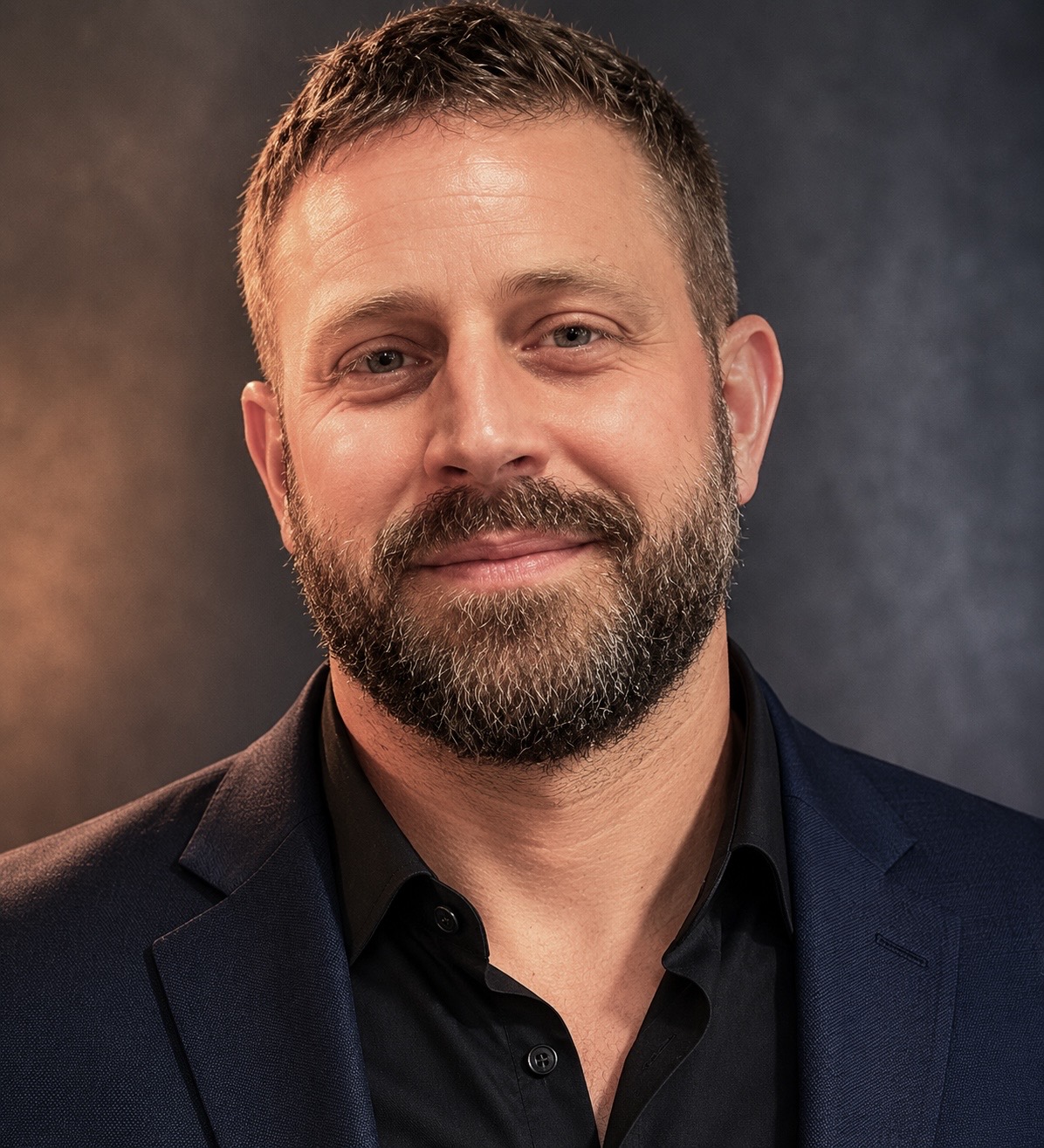
Karel Winner is a doctorally prepared psychiatric nurse practitioner who treats OCD patients every day. His practice is built around psychiatric medication management done carefully: a real evaluation, honest timelines, labs and genetic testing where they earn their place, and follow-through when the first medication is not the answer.
His background spans two decades in medicine, doctoral training at Vanderbilt, and psychiatric training at the University of Tennessee, Knoxville. The approach on this page is the approach in the room: audit what you have already been through, dose and wait the way OCD requires, measure the result, and always know the next step before you need it.
Dr. Karel Winner, DNP, PMHNP-BC, NE-PMC, CAMS-II, CTP, IFS-L3, BSP-P5, CLC, PATP, ADHD-CCSP, ASDCS, CYMHS, RDMS, RVT, RCPod. NPI 1477238004. OCD Meds is a service of Solutions Psychiatry.
Questions
Longer than most people are told. An adequate OCD trial is 8 to 12 weeks, with at least 4 to 6 of those weeks at the maximum tolerated dose, before the medication can fairly be judged. Many medications written off as failures were stopped at depression doses or depression timelines, which are not OCD trials at all.
First, the trial itself gets audited: which medication, what dose, how long, and whether the dose ever reached OCD range. If the trial was adequate and the response was not, the established next steps are a second SSRI, an older tricyclic medication approved for OCD, or adding a first-line augmenting agent. Only about 40 to 65 percent of patients respond to a first SSRI, so needing a next step is common and expected, not a dead end.
This practice provides the medication side of OCD care. ERP (exposure and response prevention) is the therapy with the strongest evidence for OCD, and many patients do best with both. If you already have an ERP therapist, your prescriber here coordinates with them, with your consent. If you do not have one, that is a reasonable thing to add alongside medication.
An augmenting agent is a second medication added to the first when the first helped, but only partly. The best-studied augmenting agents for OCD are first-line options in the guidelines, used at low doses, and they complete the response for roughly a third of people who did not respond adequately to an SSRI alone. Augmentation is a standard step on the ladder, not an experiment, and the added medication is monitored like any other, including metabolic labs when the agent calls for them.
It has a working definition: inadequate response to at least two adequate medication trials. Adequate means the right dose range for OCD, held for a full 10 to 12 weeks each. A large share of people labeled treatment-resistant have never actually completed two adequate trials, which is why the audit of past trials is the first step here.
Follow-up Appointments are 30 minutes. Progress is measured, not guessed: symptoms are tracked with the Yale-Brown Obsessive Compulsive Scale (Y-BOCS), the standard OCD severity measure, and a 25 to 35 percent reduction counts as response. Once medication is working, it is usually continued for at least 1 to 2 years to prevent relapse.
The Comprehensive Initial Appointment is $350 for 60 minutes. Follow-up Appointments are $250 for 30 minutes. The practice is in network with Aetna, Cigna and Evernorth, UnitedHealthcare and Optum, Blue Cross Blue Shield plans, Oscar, Oxford, Carelon, and Providence, and with Medicare in Arizona, California, Colorado, Texas, and Utah. Your coverage and your exact cost are verified before your Comprehensive Initial Appointment, and copays typically run $0 to $40. Cash pay is available at the rates above.
Call 911 for emergencies. Call or text 988, or visit 988lifeline.org, for the Suicide and Crisis Lifeline. Text HOME to 741741 for the Crisis Text Line. NAMI HelpLine: 1-800-950-6264, nami.org. Full list, including LGBTQIA+ and veteran lines: crisis resources.
This practice is not an emergency service.
Book a Comprehensive Initial Appointment and get an honest audit of everything you have tried, and a plan built the OCD way.
Book a Comprehensive Initial AppointmentQuestions first? Call (800) 303-3221.

 OCD MEDS